BREAKING: Brent crude oil prices surge to $119/barrel after Israeli strikes on Iranian energy infrastructure are followed by Iranian retaliation on Gulf energy infrastructure. https://t.co/IgpdaiNi4f
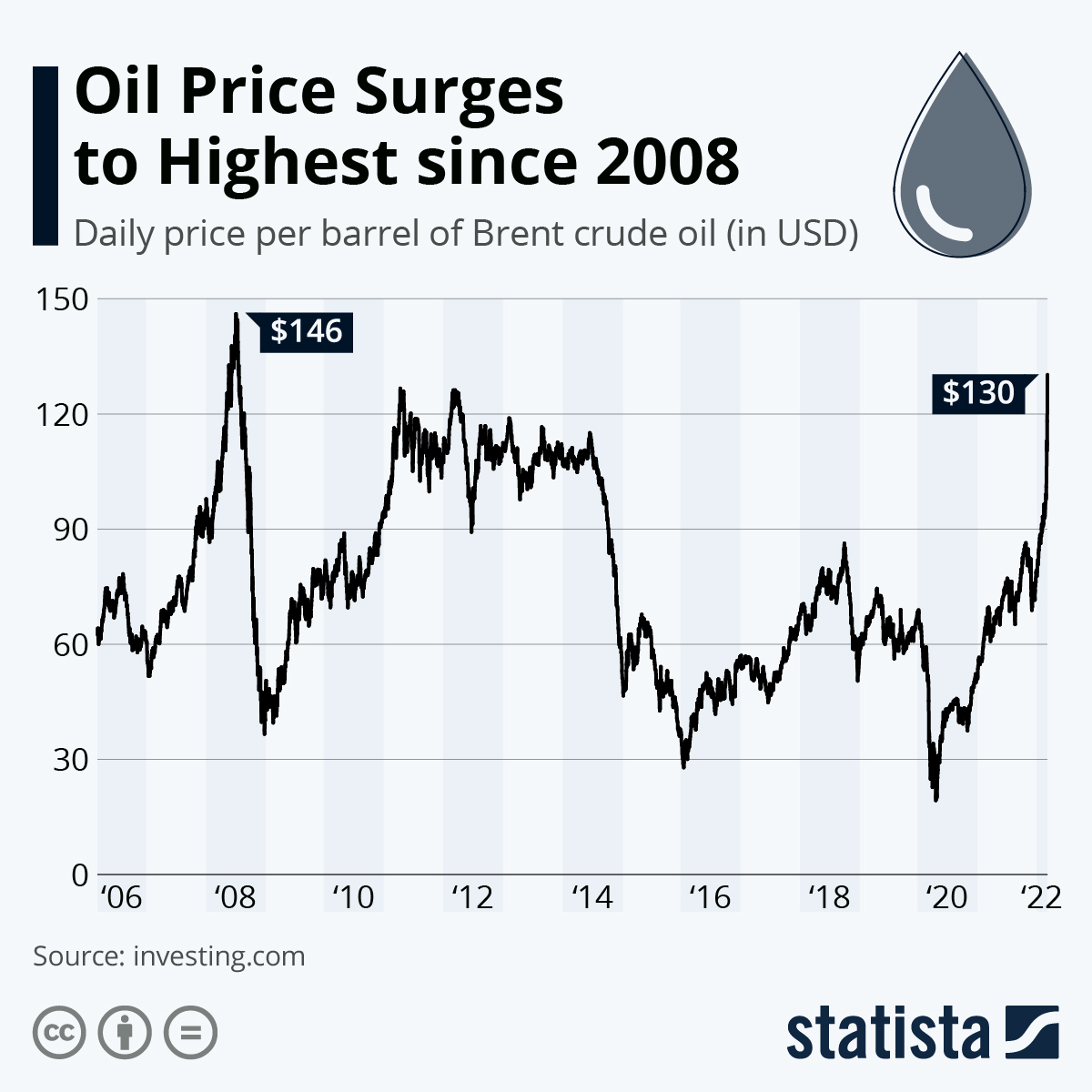
This Statista infographic is a chart of Brent crude price over time that highlights the sharp spike in early March 2026 tied to the Iran–Israel conflict. It directly visualizes the rapid rise in Brent (the surge described in the tweet) and shows how oil-market prices reacted to strikes and disruptions to Gulf energy infrastructure.
Source: Statista
Research Brief
What our analysis found
Brent crude oil prices have experienced dramatic volatility amid an escalating military conflict between Israel and Iran that has directly targeted energy infrastructure in the Middle East. On March 9, 2026, Brent crude hit an intraday high of approximately $119.50 per barrel, with WTI surging to a similar $119.48, according to Reuters market data. The spike was driven by intensifying fears of supply disruption as the conflict widened to encompass Gulf energy facilities.
The situation escalated further on March 18–19, 2026, when Israeli airstrikes reportedly struck Iran's South Pars natural gas field, one of the world's largest. Iran retaliated with strikes on Gulf-region energy infrastructure, including reported damage to Kuwait's Mina Al-Ahmadi refinery and Qatari LNG facilities. During the market reaction, Brent again briefly surged to around $119 per barrel before retreating sharply — trading at approximately $108.19 by early March 20, according to the Associated Press.
Adding to broader energy market anxiety, QatarEnergy officials indicated that roughly 17% of Qatar's LNG export capacity was affected by the damage, with repairs potentially taking years. Force majeure on some contracts was reportedly under consideration. Analysts caution that the price spikes reflect not only direct supply losses but also panic trading, tanker rerouting around the Strait of Hormuz, and precautionary production cuts by regional producers — making the full picture considerably more complex than a single headline can convey.
Fact Check
Evidence from both sides
Supporting Evidence
Reuters confirmed the $119.50 intraday high on March 9
Market data reported by Reuters and syndicated through StreetInsider documented Brent crude reaching an intraday peak of approximately $119.50 per barrel during the March 9, 2026 trading session, closely matching the tweet's $119 figure.
AP confirmed the sequence of Israeli strikes followed by Iranian retaliation
Associated Press reporting from March 19–20, 2026 described Israeli strikes on Iran's South Pars gas infrastructure followed by Iranian retaliatory strikes on Gulf energy facilities, directly corroborating the tweet's described chain of events. AP also reported Brent "briefly surged to around $119 per barrel" during this escalation.
Multiple outlets confirmed physical damage to Gulf energy infrastructure
Reuters and AP reported verified damage to multiple Gulf energy sites, including Kuwait's Mina Al-Ahmadi refinery and Qatari LNG facilities, supporting the tweet's claim that Iranian retaliation targeted Gulf energy infrastructure.
Widespread market wire coverage corroborated the price level
Multiple financial outlets and market wires repeated the intraday $119–$119.50 highs and explicitly linked the price movements to the Iran–Israel military escalation and fears of Gulf supply disruption.
Contradicting Evidence
The $119 figure was an intraday spike, not a sustained price level
Both Reuters and AP emphasized that the $119 level was a brief intraday peak, not a settlement or closing price. Brent retreated significantly after both the March 9 and March 18–19 spikes, trading as low as approximately $108.19 by March 20. The tweet's phrasing "surge to $119/barrel" could mislead readers into thinking this was a sustained price rather than a fleeting high.
Multiple factors drove the price spike beyond the strikes alone
Market analysts and Reuters commentary attributed the dramatic moves to a combination of factors including war headlines, precautionary production cuts by some producers, tanker rerouting disruptions through the Strait of Hormuz, and panic-driven liquidity dynamics — not solely the strikes themselves. The tweet implies a direct causal chain that oversimplifies the market dynamics at play.
The extent of physical supply disruption remains contested and evolving
Initial damage reports from refineries and gas facilities came from local authorities and state media, but the full operational impact — how much crude or LNG was actually removed from global supply and for how long — varied by source and remained subject to confirmation at the time of reporting, according to AP. This tempers claims that the strikes immediately caused a quantifiable, permanent supply loss justifying the price level.
Report an Issue
Found something wrong with this article? Let us know and we'll look into it.