REMINDER: 🇺🇸 FOMC Meeting & Powell Speech tomorrow. Expectations: no rate cuts; all eyes on the speech. His first comments on the U.S. economy since the US-Iran war began. https://t.co/2N7PkwlQYI
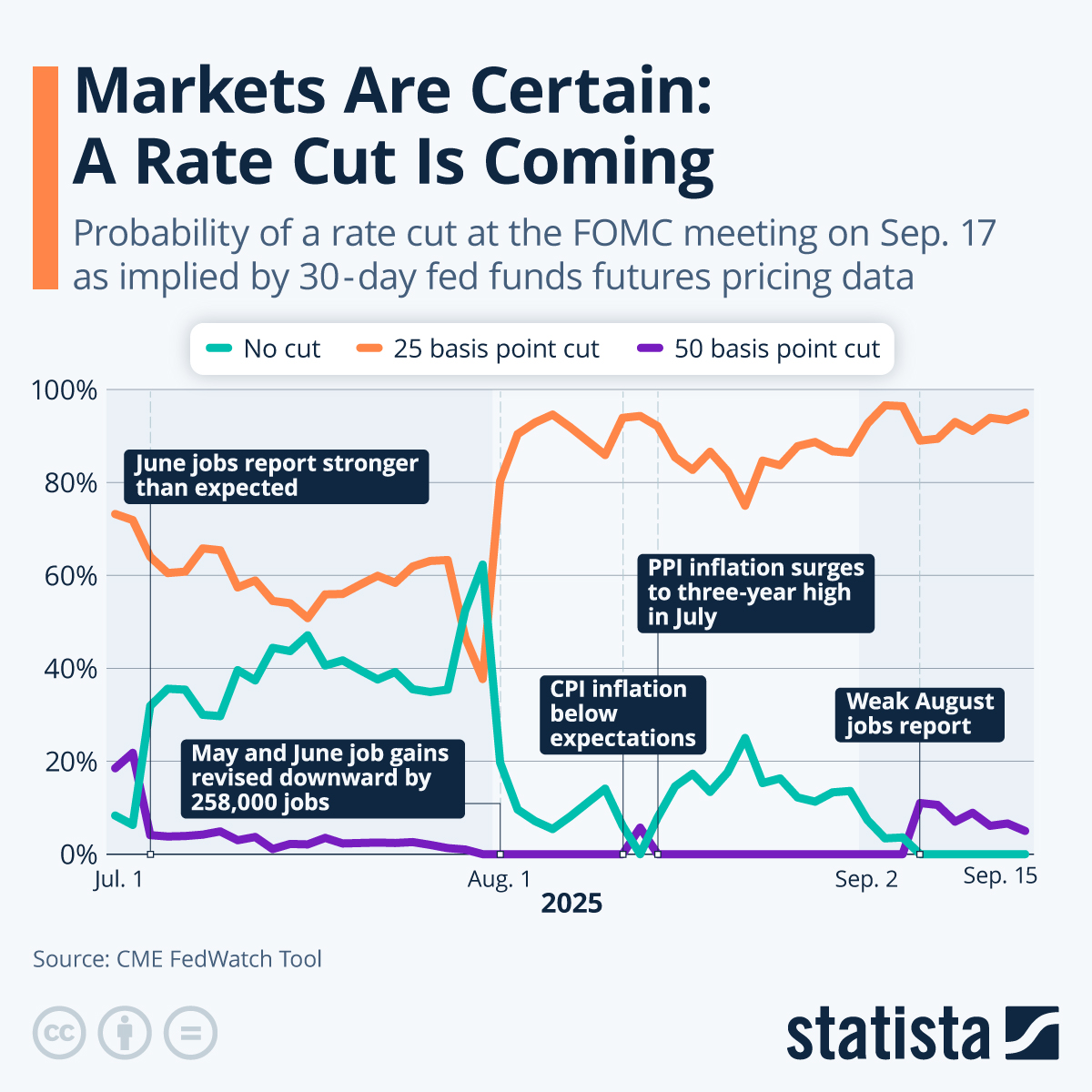
Source: Statista
Research Brief
What our analysis found
The Federal Reserve's two-day FOMC meeting on March 17–18, 2026 arrives at a uniquely volatile moment for the U.S. economy. Chair Jerome Powell's 2:30 p.m. ET press conference on Wednesday will mark his first public remarks on economic conditions since the U.S.–Israel strike campaign against Iran began on February 28, a conflict that has already sent oil prices surging above $100 per barrel and pushed the national average gasoline price to $3.79 per gallon — the highest level since 2023, according to AAA data.
The economic backdrop heading into the meeting is decidedly mixed. The Bureau of Labor Statistics reported that nonfarm payrolls fell by 92,000 in February, while the unemployment rate ticked up to 4.4%. At the same time, the February CPI showed inflation running at 2.4% year-over-year, with a monthly increase of 0.3%. The Fed held rates steady at 3.50%–3.75% at its January meeting, and market-implied probabilities from the CME FedWatch tool have shown 78% to 97% odds of another hold in March.
This meeting also includes the quarterly Summary of Economic Projections and the closely watched "dot plot," which will reveal whether Fed officials have adjusted their rate-cut expectations in light of the war-driven energy shock. Analysts at the Associated Press describe a rate hold as "almost certain," but all eyes will be on whether the dot plot shifts from one projected 2026 cut to zero — and how Powell characterizes the war's impact on inflation and growth.
Fact Check
Evidence from both sides
Supporting Evidence
FOMC meeting and Powell press conference confirmed for March 18
The Federal Reserve's official March 2026 calendar lists the policy statement at 2:00 p.m. ET and the Chair's press conference at 2:30 p.m. ET on Wednesday, March 18 — consistent with the tweet's claim that it is "tomorrow" if posted on March 17 (federalreserve.gov).
No rate cut widely expected
The Associated Press preview published March 17 states Powell is "almost certain" to announce rates unchanged. CME FedWatch probabilities reported during February and March showed 78%–97% odds of a hold, and Kiplinger's weekly preview echoed the same expectation (apnews.com, kiplinger.com).
Powell's first on-the-record remarks since the war began
The U.S.–Iran conflict started February 28, and the Fed's communications blackout for the March meeting ran from approximately March 7 through March 19. The Fed's 2026 speeches page shows no Powell speeches between February 28 and March 18, confirming the press conference would be his first public economic comments since hostilities began (federalreserve.gov, apnews.com).
War-driven energy shock supports a cautious hold
Oil surged above $100 per barrel on March 13, and gasoline hit $3.79 per gallon on March 17 — the highest since 2023. The AP preview explicitly ties these war-related price spikes to the Fed's likely reluctance to cut rates (apnews.com).
Contradicting Evidence
Not the first Fed commentary since the war began
While it may be Powell's first remarks, other Fed officials spoke publicly after February 28. Minneapolis Fed President Neel Kashkari said on March 3 that the Iran war "clouds the outlook," meaning the broader Fed had already weighed in before the blackout period began (Reuters via AOL).
A March hold does not mean no cuts in 2026
J.P. Morgan's post-January analysis and Forbes' March 5 preview both suggest potential rate easing later in 2026, even as March is expected to be a hold. The tweet's framing of "no rate cuts" could be misread as applying to the entire year rather than just this meeting (jpmorgan.com).
Pre-war guidance was already uncertain
Before the conflict began, Fed Governor Christopher Waller described a March rate cut as a "coin flip" on February 23, indicating that the path was fluid and the no-cut expectation was not solely a product of the war (apnews.com).
The dot plot could still surprise
The AP acknowledges uncertainty around how the Summary of Economic Projections might shift — officials could project one cut, zero cuts, or even signal faster easing later. The outcome is not as predetermined as the tweet's confident tone implies (apnews.com).
Report an Issue
Found something wrong with this article? Let us know and we'll look into it.